Portability: The Carry Between Rides
Portability is rarely about how fast a latch snaps shut in a three-second promotional clip. It is about what happens at 08:22 when you fold a wet scooter outside a busy station entrance, hook the stem to the rear fender, lift it by a cold aluminium tube, and step through automatic ticket gates without clipping ankles behind you.
Three physical numbers govern whether a folding scooter works in multimodal transit: total mass, centre-of-gravity balance along the folded stem, and handlebar width. Ignore any one of the three and a seemingly compact machine becomes a daily chore.
Anatomy of a Trustworthy Stem Latch
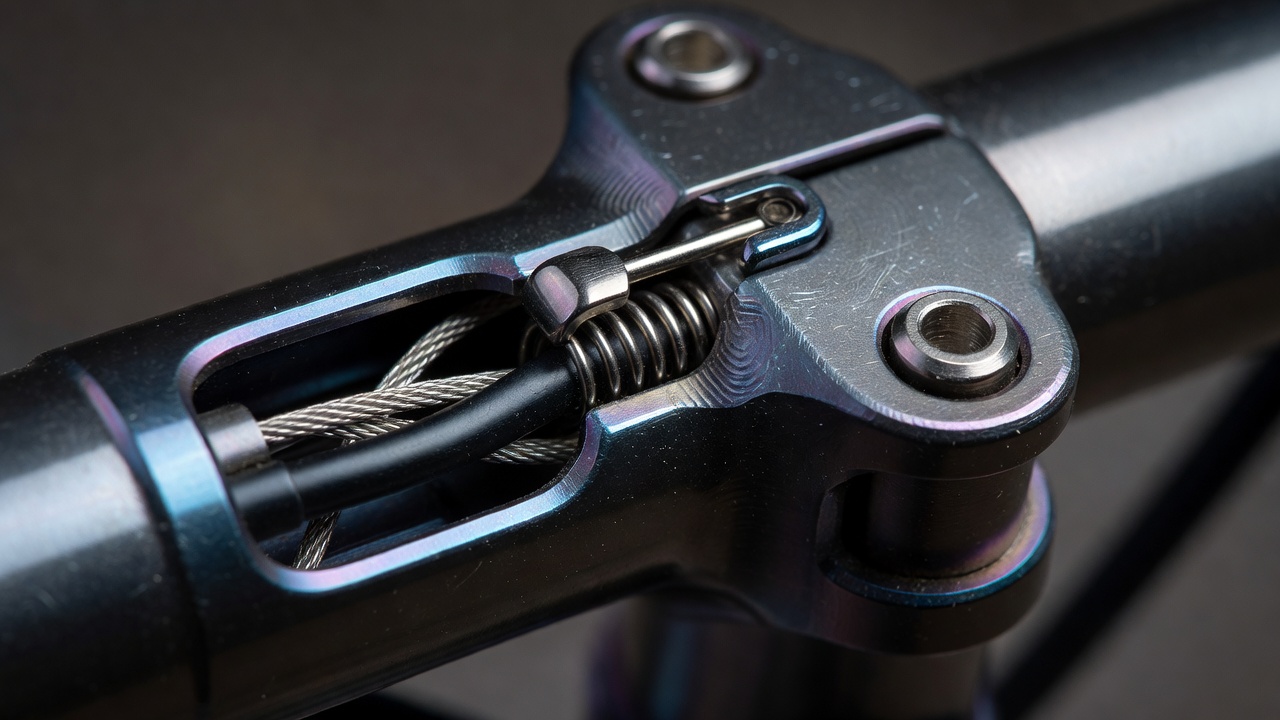
The folding joint bears the highest leverage forces on the entire scooter every time you brake hard or drop off a lowered kerb. Early commuter scooters relied on small transverse pins that wore oval over time, creating an unsettling fore-and-aft creak in the handlebars. Modern street designs have converged on three stronger mechanisms:
CL
Over-Centre Cam Lever + Safety Collar
Wide-Jaw Clamping Hinges
Uses a long forged lever with a secondary thumb slider that prevents accidental release even if the main cam loosens. Easy to adjust with a single 4 mm or 5 mm hex bolt when rubber dampers bed in.
Fast 3-sec fold
SL
Vertical Sleeve Collar
Tapered Locking Sleeves
A machined metal collar slides down over the entire joint seam. Virtually zero stem play even on rough cobbles, though grit must be wiped off the threads periodically and folding takes two hands.
Zero stem play
MH
Multi-Plane Chassis Hinges
Deck-and-Bar Folding Frames
Halves the folded footprint so the scooter stands upright beside a train seat like cabin luggage. Requires an extra 10 seconds to fold and keep clean around low-slung deck pivots.
Smallest volume
Where the Weight Sits: Hub Motors vs. Battery Decks
Pick up two 17 kg scooters and one may feel 4 kg heavier than the other. Why? If a scooter houses a heavy geared motor in the rear wheel and latches its stem hook right at the back tip of the fender, lifting near the middle of the stem causes the nose wheel to dip steeply downward toward stair risers. Conversely, front-motor scooters tip nose-down unless you grip right behind the headset.
Real-World Clearance Benchmarks (Measure Your Own Bottlenecks)
Standard Rail Ticket Gate
52 cm wide
Wide Stability Handlebar
56 cm wide
Folding Grip Handlebar
39 cm folded
Under-Desk Knee Clearance
48 cm high
“Wide 56 cm bars feel wonderfully calm in traffic, right up until you try sliding the folded scooter under a shared hot-desk bank or carrying it sideways down a commuter carriage aisle.”
— Commute Scenario: Open-plan office + peak metro
The Trolley Roll Trick & Hallway Etiquette
Walking 350 metres through a terminal concourse carrying even a 14 kg scooter drains your forearm before your workday starts. Check whether your shortlisted scooter supports one of two rolling modes:
- Unfolded walking walk-along: Most commuters simply walk beside the unfolded scooter where permitted, using the front brake lever when pausing on escalators or lifts.
- Single-wheel nose trolleying: Some frames let you fold the stem, grip the handlebar stem cap, and roll the machine on its front wheel like a wheeled suitcase without scraping the front mudguard.
At home and work, keep a £12absorbent boot tray by the socket. Rolling wet tyres straight onto a rubber lip tray stops dirty meltwater pooling on timber floors and eliminates friction with flatmates or facilities managers.
Monthly Hinge & Stem Inspection Checklist